


Patient tracking board
Use color and timers to flag delays against your targets.
Shows location, acuity, time in department, and next step for each patient.
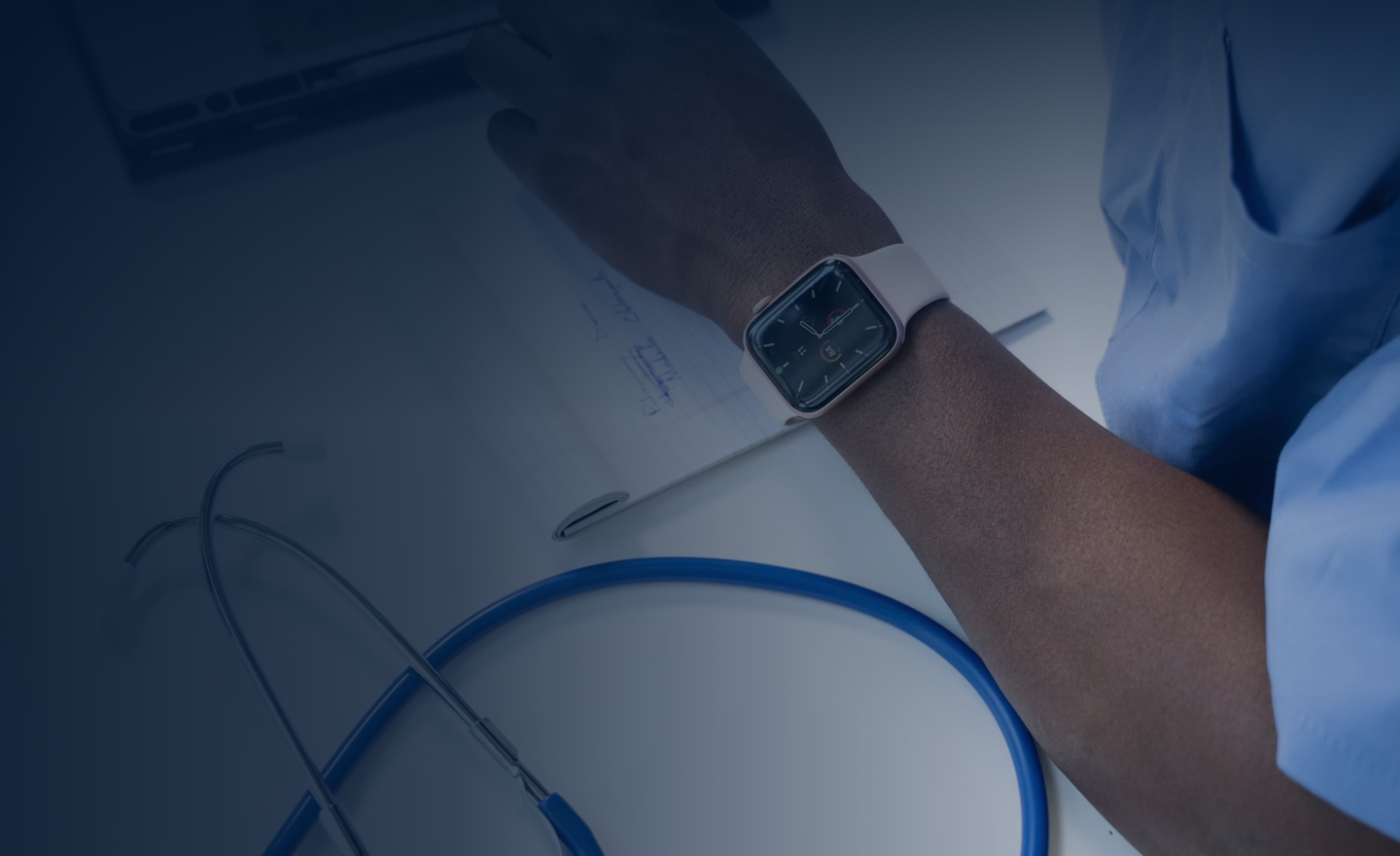
Most EDIS tools record the past. The board shows who is in which bed, but not who will need one next. Bed requests go out after the admit order, and inpatient units react late.
Svitla builds EDIS software that treats patient flow as the core problem. Triage, documentation, orders, results, and bed requests run on one live view of the department. Clinicians chart faster. Leaders see bottlenecks while they still have time to act.
Handle surges, trauma activations, and teaching workflows. Keep residents, attendings, and pending results in view at the same time.
Run a lean department with small teams and frequent transfers. Produce documentation that holds up to coding and billing review.
Operate apart from the main campus while sharing records, imaging reads, and transfer requests with the parent health system.
ACEP reports that over 90% of emergency departments routinely run crowded, and boarding is the main cause. CMS has also finalized a new emergency care access and timeliness measure in its CY 2026 outpatient payment rule. Boarding time now carries reporting weight, not just operational pain.

We observe triage, rooming, results, and handoffs across a busy shift. We pull timestamps from your current systems to find where minutes actually go.
Every workflow is tested with realistic volumes, including surge and downtime scenarios. ED physicians and nurses review screens before they go live.
Our team supports go-live at the elbow, around the clock. We track door-to-provider and boarding times from day one and tune the system with your leaders.
Below, Svitla shares a sample feature set that forms the core of an EDIS solution. Each real-life use case is unique, so the functionality should be elaborated on and tailored to your department’s volume, layout, and staffing model.
Use color and timers to flag delays against your targets.
Shows location, acuity, time in department, and next step for each patient.
Supports quick registration, with full registration completed later.
Guides triage nurses through ESI scoring and protocol-based orders.
Complaint-based templates for physicians, nurses, and advanced practice providers.
Supports scribes and dictation alongside direct entry.
ED-specific order sets for common complaints and protocols.
Drug interaction and allergy checks at the point of ordering.
Lists every pending lab, image, and consult by patient.
Alerts the right clinician when a critical result arrives.
Sends early bed requests based on predicted admissions.
Tracks boarding time from decision to departure for each patient.
Generates discharge instructions in plain language.
Manages transfer requests and documentation for receiving facilities.
Tracks door-to-provider, length of stay, left without being seen, and boarding time.
Supports reporting for CMS measures, including boarding-related measures.
Answer a few simple questions and find out whether you should opt for a custom solution or a pre-built EDIS platform.
Do your clinicians rely on a whiteboard or a separate tool to track patients?
Does your current system miss pending results during shift changes?
Do bed requests go out only after the final admit decision?
Do ED physicians spend more time charting than they want to?
Has your hospital EHR's ED module failed to match your workflow?
Do you need to report boarding time for new CMS measures?
Would arrival and admission forecasting help you plan staffing?
Do you run more than one ED, including freestanding sites?
Thank you! We will be in touch soon.
Below, Svitla outlines the ROI factors an EDIS solution typically affects. Actual results depend on your volume, payer mix, and current performance, so these should be modeled on your own data.
Each retained patient is care delivered and revenue kept.
Fewer return visits from patients who left before treatment.
Beds turn over faster for the next emergency.
Less time spent on hallway care and ambulance diversion.
Documentation gaps are flagged before the visit is billed.
Fewer coder queries back to busy ED physicians.
ED-specific templates and AI drafting reduce clicks per visit.
Less after-shift charting, which supports clinician retention.
Leaders see performance daily instead of quarterly.
Reports come from the same timestamps clinicians use.
Every shift change starts with a complete list of outstanding items.
Critical results reach the right clinician without delay.
An EDIS runs in the least forgiving setting in the hospital. It must work at 3 a.m. during a surge, survive network downtime, and never slow a trauma resuscitation. That shapes every build decision.
We observe the department across day, night, and weekend shifts. We document triage protocols, rooming logic, provider assignment, and handoffs. We pull timestamps from current systems to measure door-to-provider, length of stay, and boarding. These baselines define what the new system must improve.
We design the patient identity model and the interfaces to the EHR, LIS, RIS, PACS, pharmacy, and bed management. We plan message volumes for peak hours, not averages. Downtime procedures and local data caching are designed at this stage, not added later.
ED physicians and nurses co-design templates and order sets. We test each template against real chart samples, with protected health information removed. The goal is fewer clicks per visit without losing what coding and quality reporting need.
We run full-shift simulations with realistic patient volumes and surge events. We test network loss, interface failures, and recovery. Clinicians practice workflows before go-live, including mass casualty scenarios.
Go-live happens with our team at the elbow, around the clock, for the first weeks. We track throughput metrics daily and adjust board rules, alerts, and forecasts. After stabilization, we move to a regular release schedule based on clinician feedback.

A focused EDIS for one community or freestanding ED, with tracking, triage, and documentation, typically starts around $150,000. A full EDIS for a high-volume or multi-site department, with CPOE, bed management, and predictive flow, can exceed $600,000. The number of interfaces and ED sites drives most of the difference.
Want to understand the cost of your EDIS software development?
Calculate the costTell us about your department’s volume, sites, and systems. We’ll send you a tailored estimate for your EDIS solution.
Thank you! We will be in touch soon.
What our clients say about us

Svitla Systems rebuilt WA Health's medical invoice assessment system (MAAS) on OutSystems low-code, integrating with WebPAS and Oracle Fusion and adding a configurable rules engine. Delivered in just five months against a hard deadline, it cut annual costs 66% from $1.2M to $400K and won the 2019 OutSystems Innovation Award.

Svitla Systems built MOIRA a desktop application that automated a complex, manual coordination process, adding screens for document processing, file import/export, and email generation atop SQL Server with role-based access. It improved efficiency, gave clear visibility of each item's status, and sped up client service and inquiry resolution.

Svitla Systems redeveloped the MSBase Foundation's MS patient registry into a full Microsoft-stack web application that uses IoT to integrate device data like volumetric MRI metrics. Researchers worldwide can now search, visualize, and run observational sub-studies, advancing efforts to predict disease progression and improve patient outcomes.


With 17 years of experience in engineering healthcare software and practical knowledge of 10+ industries, Svitla offers full-cycle consulting and engineering services to deliver effective EDIS solutions.
We assess your ED workflows, throughput data, and current systems. You get a clear build, extend, or replace recommendation with an interface plan and a phased roadmap.
We design, build, and test your EDIS, from the tracking board to clinical documentation. Our teams handle HL7 and FHIR interfaces, downtime design, and clinician-facing interfaces.
We audit your current EDIS or EHR module and the workarounds around it. We plan the migration and add what the old system lacked, such as predictive bed requests. Cutover happens in phases, followed by validation of timestamps, interfaces, and chart completeness.
Many EHR ED modules work well for documentation. They often fall short on flow: tracking, pending results, and early bed requests. A custom EDIS can run beside your EHR and handle those workflows. The EHR remains the system of record.
No. The system flags patients whose data suggests higher risk than their assigned ESI level. The triage nurse decides. Every flag and every decision is logged, so you can review how well the model performs.
We design downtime procedures into the build. The tracking board keeps a local copy of current patients and statuses. When systems return, queued orders and notes reconcile with the main record.
Yes. The system captures arrival, admit decision, and departure timestamps from the same source. Reports follow the measure definitions you need to submit. We update them as CMS specifications change.
ED clinicians have little time for training, so we design for speed and familiarity. Most training happens through short, role-based sessions and at-the-elbow support. Screens follow the order clinicians already work in.
It supports rapid registration with temporary identifiers and bulk patient creation. The board switches to a surge view that tracks triage categories and locations. Records merge with full identities once patients are identified.
Yes. Each site gets its own board, layout, and rules. Leaders see system-wide volume and boarding. Patients transferred between sites keep one continuous record.
We build to HIPAA requirements with role-based access, automatic session timeouts, and audit logs. Tracking boards can mask patient names on public-facing screens. Every chart access is recorded.
Hospital and Clinical Management Software Solutions
Relevant Services for Emergency department information system (EDIS)