


Digital work order management
Guest-impact prioritization that routes an occupied-room issue ahead of a back-of-house one.
Requests logged, assigned, and tracked from report to confirmed resolution.

Hotel maintenance software has to survive some of the highest staff turnover of any industry, so we treat interface simplicity and mobile-first design as core requirements, not an afterthought. Hotels running a structured CMMS report 25 to 35% lower maintenance costs in year one, savings that come from catching small issues before they become emergency repairs. Every system we build tracks a request from report to confirmed resolution.
Before writing code, we map your property’s asset inventory, current work order process, and PMS setup so integration complexity and staff onboarding needs surface early.
You’re accountable for whether a guest-reported issue gets fixed before checkout or lingers for a week. We build work order routing that prioritizes by guest impact, not just when the ticket was filed.
You need maintenance visibility without a system built for a 500-room enterprise chain. We build focused tools sized to a single property’s asset count and team.
You’re comparing maintenance performance across properties that all report differently, if they report at all. We build centralized tracking that gives every property the same workflow and a single comparable view.
A maintenance request that lives on a sticky note or a radio call is easy to forget, and forgetting one costs more than fixing it would have. Here’s where that gap shows up.

Before we write any code, we review your equipment inventory, your current work order process (however informal), and where requests currently get lost.
Given the pace of staff turnover in hospitality, we prioritize an interface new hires can use within their first shift, not just a feature-complete system.
Development happens in short, reviewed cycles, so your engineering team tests real workflows early, not a finished product with no chance to adjust.
We test preventive scheduling and failure prediction against your actual equipment history, then train staff before rollout.
Below, Svitla shares a sample feature set that forms the core of a hotel maintenance solution. Each real-life use case is unique, so you should elaborate on the functionality and tailor it to your property size, asset mix, and staffing structure.
Guest-impact prioritization that routes an occupied-room issue ahead of a back-of-house one.
Requests logged, assigned, and tracked from report to confirmed resolution.
Recurring task scheduling based on manufacturer guidance and asset-specific history.
Automatic rescheduling when a task is delayed, so nothing silently falls off the calendar.
Models that flag equipment likely to fail based on repair history and usage patterns.
Confidence scoring, so technicians know which flags to prioritize first.
A full record of every asset's specifications, warranty status, and repair history.
Warranty expiration alerts before a repair falls outside coverage unnecessarily.
Work orders accessible and closeable from a phone, without returning to a desk.
Offline capability for basement mechanical rooms and dead zones with poor signal.
Downtime, response time, and cost tracking by asset and property.
Property-by-property comparisons for operators managing more than one location.
Answer a few simple questions to find out whether you should choose a custom solution or a pre-built hotel maintenance platform.
Do requests currently get logged by radio, paper, or verbal handoff?
Does your current system fail to prioritize guest-facing issues automatically?
Do you need integration with a specific PMS or vendor ordering system?
Has high staff turnover made your current maintenance tool hard to keep everyone trained on?
Do you manage more than one property with inconsistent maintenance tracking?
Do you need AI-based capabilities such as failure prediction?
Thank you! We will be in touch soon.
In Svitla’s projects, we consistently aim to address the key factors that drive maximum value and cost-effectiveness in hotel maintenance management software.
Structured preventive maintenance reduces emergency repairs, which cost the most.
Faster response and prioritized routing get rooms back into inventory sooner.
A mobile-first, intuitive interface reduces the training burden that high turnover creates.
Preventive scheduling and early failure detection extend the useful life of major systems.
Centralized tracking lets operators compare and improve performance across properties.
Developing hotel maintenance software means building something a technician has to want to open on their phone during a busy shift. At Svitla, we work through four phases.
We catalog your equipment inventory and current process, then define a feature set and interface designed for fast staff adoption given typical hospitality turnover.
Our engineers build the solution in short, reviewed cycles, testing preventive scheduling and failure prediction against your actual historical repair data.
We connect the system to your property management, guest communication, and parts ordering systems, testing each integration against live data.
We train engineering and front-office staff before rollout, then stay available for ongoing support as your property and asset base grow.

Based on Svitla’s experience, average costs for custom hotel maintenance management software range from $40,000 to $250,000, depending on property size, the number of integrations, and the AI functionality involved.
Want to understand the cost of your hotel maintenance management software?
Calculate the costPlease answer a few quick questions about the hotel maintenance management software you’re looking to build. This will help our experts better understand your needs and calculate a tailored quote much faster.
Thank you! We will be in touch soon.
What our clients say about us
Real feedback from teams who worked with us on work order routing, asset tracking, and staff adoption challenges like these.
A closer look at real projects where preventive scheduling, PMS integration, or multi-property visibility were part of the challenge, not just the pitch.

Svitla Systems modernized winery Tahbilk's aging e-commerce and telesales software, merging them into one system handling online, phone, and cellar-door sales with real-time inventory, a single source for customer data, and Australia Post integration. It cut customer lookup time from 2-3 minutes to 30 seconds and boosted overall efficiency.

We built a high-performing Security Operations Center for a global travel guidance platform, enabling real-time threat detection and response. The system is optimized for processing high number of alerts, significantly reducing detection and response times while ensuring compliance with industry standards.
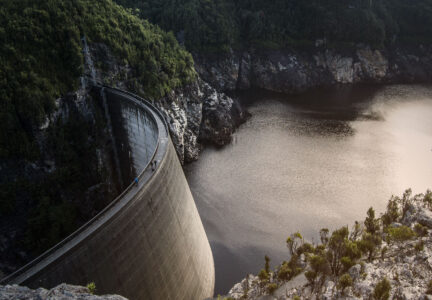
Svitla Systems rebuilt TasWater's underperforming field app as H2GO, an OutSystems iPad app redesigned around the field worker with reliable online/offline data handling, streamlined work orders, and a digitized job safety process. It improved data integrity and connectivity and won Best Project at the 2020 TasICT Excellence Awards.
With 17 years of experience in engineering hospitality software and practical knowledge of 10+ industries, Svitla offers full-cycle consulting and engineering services to deliver effective hotel maintenance management solutions.
Asset inventory and process needs analysis, audit of existing workflows, recommendations on architecture and tech stack, integration plan, cost and ROI estimate.
Solution architecture, custom development of work order and preventive scheduling functionality, integration with PMS and vendor systems, QA, continuous support.
Audit of your current CMMS or paper process, migration plan for historical asset and repair data, AI upgrades the old system couldn't support, phased cutover, post-migration validation.
We design the interface around the handful of actions a technician actually performs daily: log an issue, close a work order, check a schedule, rather than a feature-dense system that takes weeks to learn.
Yes, we build guest-impact prioritization into the routing logic, so an issue in an occupied or sold room surfaces ahead of a lower-urgency back-of-house task.
We build offline capability that lets a technician log and close work orders without connectivity, syncing automatically once signal returns.
Yes, we design integration with your specific PMS as part of the first project phase, so room status and maintenance issues stay in sync.
Off-the-shelf tools work well for standard properties. Custom development pays off when your asset mix, PMS integration, or multi-property reporting needs don’t fit a packaged platform’s assumptions.
Yes, we offer post-launch support and continue to implement enhancements as your property portfolio and asset base evolve.