


Optimization engine
Vehicle routing problem (VRP) solvers with time windows, capacity, and driver rules.
Configurable objectives: cost, distance, time, balance, or service level.
Fast computation for large daily plans.

Every fleet manager knows the gap between the plan on screen and the day on the road. Generic tools optimize distance, but your drivers deal with time windows, loading docks, traffic, and customer quirks.
We build route optimization around the rules that actually shape your day. First, we collect your constraints and historical routes. Then we benchmark optimization approaches against your real data before committing to one.
The result is an engine that planners trust. It explains its choices, lets people adjust plans, and learns from what really happened on each route.
Delivery and mobility startups get an optimization engine they can embed in their app or platform. We design APIs, scalability, and pricing logic for many clients and fast growth.
Regional distributors and delivery companies replace manual route planning with automated daily plans. We focus on the constraints that matter most and keep the interface simple for planners.
National fleets get optimization at scale across many depots and thousands of stops. We add multi-depot planning, territory design, and integration with TMS, WMS, and telematics.
When routes are planned by hand or by basic tools, costs grow quietly. These are the problems we solve most often:

We’ll discuss your business goals, budget, and timeline, as well as your fleet, depots, and daily stop volumes. During this call, we’ll determine if you need end-to-end outsourcing or another engagement model.
We’ll craft a plan and assemble a team that includes optimization engineers, data scientists, and mobile developers. If useful, we’ll start with a benchmark on your historical routes.
Our engineers will get to work. We will track metrics such as distance per stop, on-time rate, and plan computation time, and keep you informed about our progress.
Below, Svitla shares a sample feature set that forms the core of route optimization software. Each fleet is different, so we tailor these features to your constraints, vehicles, and service promises.
Vehicle routing problem (VRP) solvers with time windows, capacity, and driver rules.
Configurable objectives: cost, distance, time, balance, or service level.
Fast computation for large daily plans.
Automatic stop sequencing and vehicle assignment.
Visual plans on a map with timelines.
Insertion of new orders into running routes.
Re-planning after cancellations, delays, or breakdowns.
Time-dependent travel times from map and traffic providers.
Continuous ETA updates based on live vehicle positions.
Compare fleet sizes, depot locations, or delivery windows.
See the cost and service impact before deciding.
Design of delivery zones by volume, workload, and geography.
Rebalancing as demand changes.
Drag-and-drop manual adjustments with instant feasibility checks.
Lock stops or routes before re-optimizing.
Turn-by-turn navigation, stop details, and proof of delivery.
Offline mode and route updates pushed in real time.
SMS and email ETAs with live tracking links.
Delivery preferences and rescheduling options.
Machine learning predictions of stop service times.
Traffic and demand forecasting for better day-ahead plans.
Detection of recurring deviations between plan and reality.
Distance, cost, and on-time dashboards by route and driver.
Plan versus actual comparison for every route.
REST APIs for TMS, e-commerce, and partner platforms.
Batch and real-time optimization requests.
Answer a few simple questions to find out whether you should choose a custom solution or a pre-built route planning tool.
Do you plan routes for more than 20 vehicles every day?
Do your routes depend on special constraints, such as temperature zones, skills, or road restrictions?
Do your planners still build or fix most routes by hand?
Do new orders or changes arrive after routes are already planned?
Do you miss delivery windows more often than you would like?
Do you need optimization inside your own platform or customer-facing app?
Are you adding electric vehicles to your fleet?
Would AI predictions of traffic and service times improve your plans?
Have standard routing tools failed to reflect how your fleet really works?
Thank you! We will be in touch soon.
In Svitla’s projects, we focus on the factors that drive maximum value and cost-effectiveness in route optimization:
Shorter, better-sequenced routes reduce miles and idle time across the fleet.
Better routes let each vehicle and driver complete more deliveries per shift.
Higher utilization can postpone vehicle purchases or reduce rentals in peak season.
Realistic plans and live ETAs improve service levels and reduce penalties.
Balanced workloads cut overtime hours and driver fatigue.
Automated plans replace hours of manual work and reduce dependency on key planners.
Fewer miles mean lower CO2 emissions, which supports sustainability goals and reporting.
Developing route optimization software combines operations research, data engineering, and mobile development. At Svitla, projects follow these key stages:
Define goals, service promises, fleet structure, and pain points with planners and drivers.
Document all routing rules and gather historical orders, routes, and stop times.
Compare solver approaches on your historical data and measure gains against current plans.
Define architecture, map providers, mobile approach, and integration points.
Set scope, deliverables, timeline, budget, and team, with clear savings targets.
Build the engine, planner workspace, driver app, and APIs in short iterations.
Test plan feasibility, performance, and app usability with a pilot group of drivers.
Connect OMS, WMS, telematics, maps, and notification services.
Expand depot by depot and train planners and drivers.
Tune constraints, retrain AI models, and add features as your fleet grows.

Based on publicly available development estimates, building custom route optimization software can cost approximately $40,000–$90,000 for an MVP, $120,000–$250,000 for a full-featured platform, and $250,000–$400,000 or more for an enterprise solution. Key cost drivers include the number and complexity of routing constraints, fleet size and stop volume, optimization speed and real-time rerouting requirements, driver app functionality, system integrations, and AI-powered prediction models.
Want to understand the cost of your route optimization solution?
Calculate the costPlease answer a few quick questions about the route optimization solution you’re looking to build. This helps our experts calculate a tailored quote much faster.
Thank you! We will be in touch soon.
What our clients say about us

Examine how we enhanced a fleet management mobile app with new features and improved user experience, ensuring functionality synchronization and stability across iOS and Android platforms, leading to a faster development cycle and more capable and stable applications.
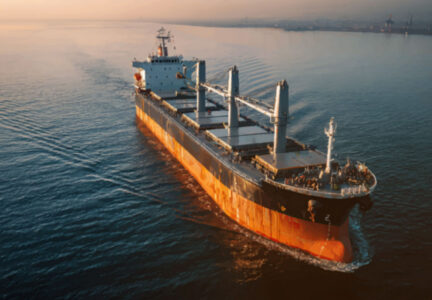
Svitla Systems worked with MER Solutions to create MER Vet, a web-based vessel-vetting application that verifies bulk carriers' physical condition, operation, and safety performance to help clients identify non-compliant vessels. Delivered as a working demo against a tight conference deadline, it secured early buy-in from major port authorities.

Svitla Systems partnered with Mondo to rapidly build the first iteration of a water-monitoring application, working from just a screenshot and wireframes. Integrating IoT usage data captured every 15 minutes, it tracks household usage, targets, and averages, and was delivered into users' hands for testing in a little over five weeks.






With 20+ years in software engineering and 500+ clients served worldwide, Svitla offers full-cycle services to deliver route optimization software that cuts miles and keeps promises.
Analysis of current routing practices and costs.
Constraint mapping with planners and drivers.
Benchmark of potential savings on historical data.
Build vs buy assessment.
Architecture and tech stack recommendations.
Cost and time estimates, plus expected ROI calculation.
Optimization engine design and development.
Planner workspace and driver app development.
Map, traffic, and telematics integration.
AI models for service times and traffic.
Field testing and quality assurance.
Continuous tuning and evolution.
It depends on how you plan routes today and your constraints. We usually run a benchmark on your historical data first, so you see expected savings before full development.
Route optimization focuses on calculating the best sequence and assignment of stops. Routing and scheduling software adds dispatching, appointments, driver shifts, and daily operational control. Many companies need both.
We select the approach after benchmarking. Options include proven open-source solvers, commercial solvers, metaheuristics, and custom heuristics for specific rules.
Yes. We build dynamic re-optimization that inserts new orders and handles delays without disrupting the whole plan.
We integrate commercial and open map and traffic providers. The choice depends on coverage, truck data needs, and cost.
Yes. Planners can move stops, lock routes, and re-optimize the rest. The system checks feasibility instantly.
Machine learning learns real stop durations and travel times from history. Plans then reflect what drivers can actually do.
Yes. We model battery range, charging stops, and charger availability.
Yes. We tune constraints, retrain models, and extend the solution as your fleet and service area change.