


Invoice capture and data extraction
Automated intake of paper, PDF, and e-invoices from email, portals, and scanners.
AI-based extraction of header and line-item data, validated against vendor records and purchase orders.

Accounts payable is where finance, compliance, and vendor relationships meet, so we treat control and traceability as architecture decisions. Every AP system we build has access controls, encryption, and a complete audit trail.
Before writing code, we map your invoice-to-pay flow: where invoices arrive, who approves them, how exceptions are handled, and which systems hold the master data. This way, integration complexity and regulatory requirements surface at the start, not mid-project.
We build lean AP modules that fit inside your product or back office and scale as transaction volumes grow, without the enterprise overhead you don’t need yet.
We replace spreadsheet-and-email invoice processing with automated capture, approvals, and payments that your existing accounting tools can plug into.
We handle multi-entity, multi-currency AP operations: complex approval matrices, ERP integration, and compliance requirements such as SOX controls and audit-ready reporting.

We’ll discuss your business goals, budget, and timeline. During this initial call, we’ll determine if you need end-to-end software outsourcing or one of our other engagement models.
We’ll craft a plan outlining our approach, based on your requirements and the chosen engagement model. We’ll also assemble a team of specialists with experience in financial software and AP automation.
Our software engineers will get to work. Throughout the development process, we will track metrics and keep you informed about our progress, so you stay up to date.
Below, Svitla shares a sample feature set that forms the core of an accounts payable solution. Each real-life use case is unique, so the functionality should be elaborated on and tailored to your business specifics.
Automated intake of paper, PDF, and e-invoices from email, portals, and scanners.
AI-based extraction of header and line-item data, validated against vendor records and purchase orders.
Configurable multi-level routing based on amount, cost center, department, or project.
Delegation, escalation rules, and approvals from mobile devices.
Automated matching of invoices against purchase orders and goods receipts.
Exceptions with mismatched quantities, prices, or terms are flagged for review instead of blocking the whole queue.
Scheduled and ad-hoc payments via ACH, wire, or virtual card.
Payment batching and prioritization that helps capture early-payment discounts and avoid late fees.
Centralized vendor master data with a self-service supplier portal for onboarding.
Invoice submission, and payment status, including collection of tax forms and banking details.
AI-supported detection of duplicate invoices, unusual amounts.
AI-supported detection of suspicious changes to vendor banking details before a payment goes out.
Real-time AP aging, accruals, spend by vendor and category, and days-payable-outstanding tracking.
Audit-ready reports exportable to your BI tools.
Alerts for approaching due dates, stalled approvals, and policy exceptions.
A complete audit trail of every action for internal control and external audits.
Answer a few simple questions and find out whether you should opt for a custom solution or a pre-built AP tool.
Do you process a high volume of invoices across multiple entities, currencies, or countries?
Do your approval rules go beyond standard flows, e.g., multi-level approvals based on amount, department, or project?
Does your team still spend significant time on manual invoice data entry or exception handling?
Do you need the AP system to integrate with a specific ERP, accounting platform, procurement tool, or bank?
Have you experienced duplicate payments, late fees, or missed early-payment discounts in the last year?
Do you operate under regulatory requirements such as SOX, GDPR, or PCI-DSS?
Do you need AI-based capabilities such as invoice data extraction, fraud detection, or payment forecasting?
Have you already tried an off-the-shelf AP tool that didn’t cover your workflows?
Do you plan to keep scaling transaction volumes over the next 2–3 years?
Thank you! We will be in touch soon.
In Svitla’s projects, we consistently aim to address the key factors that drive maximum value and cost-effectiveness in accounts payable automation:
Automated capture and routing reduces the manual effort behind each invoice, cutting the cost per invoice processed as volumes grow.
Faster approval cycles let you pay within discount windows instead of missing them, turning AP from a cost center into a source of savings.
Automated duplicate checks and anomaly detection prevent double payments and fraudulent disbursements before money leaves the account.
Scheduled payments and due-date alerts eliminate avoidable late fees and protect vendor relationships.
Real-time visibility into liabilities and payment schedules supports days-payable-outstanding management and more accurate cash forecasting.
A complete audit trail and enforced approval policies shorten audit preparation and reduce internal control findings.
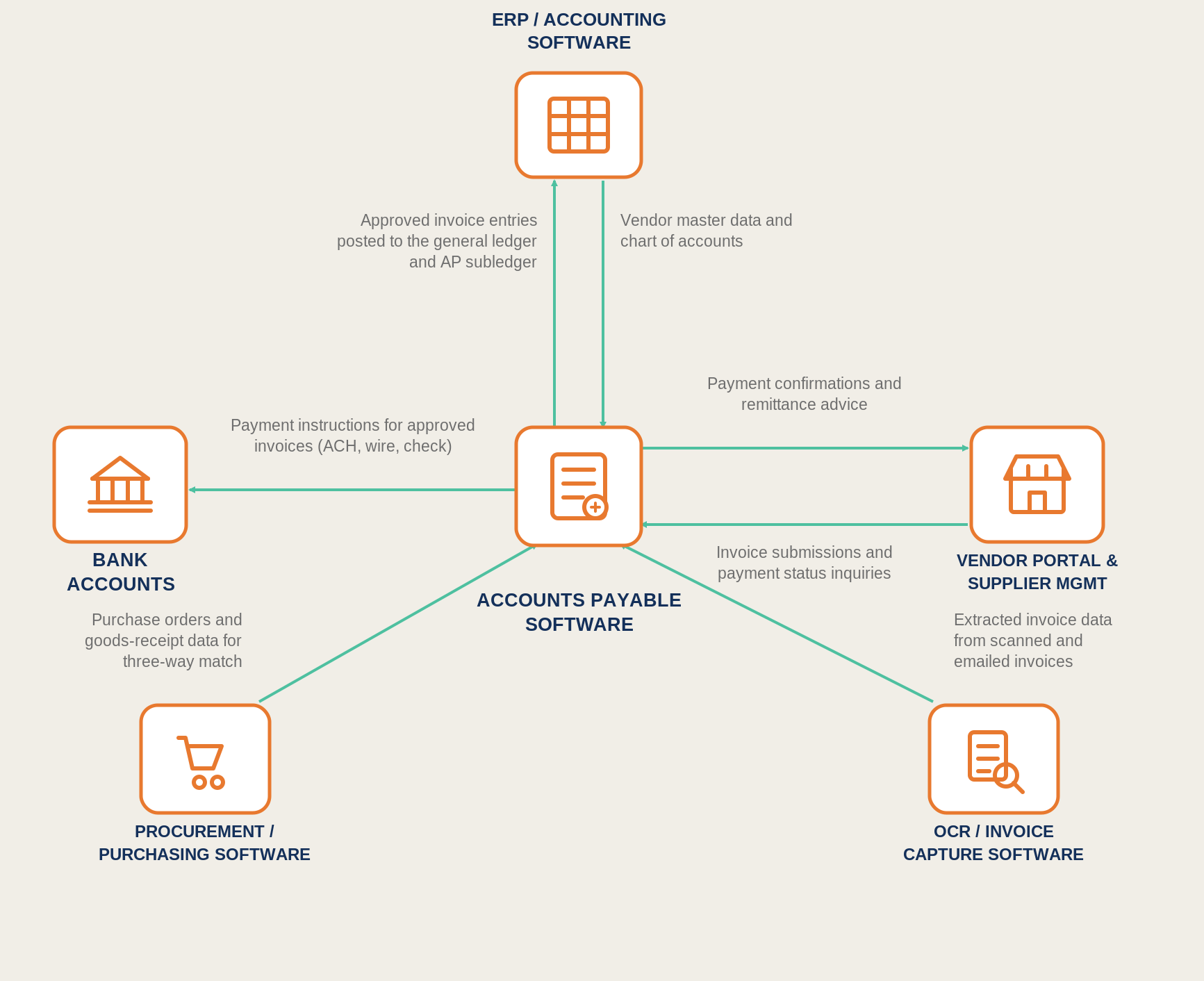
Developing accounts payable software is a multifaceted process that includes business analysis, solution architecture and design, development, testing, integration, and comprehensive user training.
At Svitla, the implementation of AP systems follows these key stages:
Analyze business objectives, current invoice-to-pay workflows, and gather detailed requirements for the AP system.
Define the optimal feature set, system architecture, and technology stack tailored to your invoice volumes and control requirements.
Outline the project scope, deliverables, timeline, budget, and team structure.
Build the AP solution iteratively, delivering working functionality and reviewing it in short cycles.
Verify functionality, security, and performance, including approval logic, matching rules, and payment calculations.
Migrate vendor master data, open invoices, and payment history from legacy tools with validation at every step.
Connect the system with your ERP, banks, procurement tools, and document services.
Train AP staff, approvers, and administrators on the new workflows.
After the system goes live, we offer ongoing technical support to ensure stability and performance. We also implement enhancements and new features as your business and payables volumes evolve.

Based on Svitla’s experience, average costs for building custom accounts payable software vary from $400,000 to $1,000,000, depending on the solution complexity, the number of integrations, and AI functionality involved.
Want to understand the cost of your custom accounts payable software?
Calculate the cost
What Our Clients Say About Us

Discover how we rewrote a financial analytics app from scratch, boosting scalability, performance, and storage capacity. Our solution enables effortless feature expansion, remote database management, and flexible infrastructure choices for the client.

Uncover the ways we streamlined the testing process for a global tech leader's payment terminal software, introducing an automated framework and BDD-style tests that accelerated testing, enhanced quality, and reduced costs, enabling more efficient testing under various conditions.

Discover how we significantly advanced a collaborative banking fintech solution, fostering integration between fintech and banks. Enhancements included improved web and mobile app performance, UX/UI redesign, and utilizing a microservices architecture and cloud services for scalability and optimal platform operation.







Please answer a few quick questions about the accounts payable solution you’re looking to build. This will help our experts better understand your needs and calculate a tailored quote much faster.
Thank you! We will be in touch soon.
With 17 years of experience in engineering financial software and practical knowledge of 30+ industries, Svitla offers full-cycle consulting and engineering services to deliver effective accounts payable solutions.
Accounts payable process and needs analysis
Audit of the existing AP workflows and tools (if any)
Recommendations on optimal features, architecture, and tech stack
A plan of integrations with your ERP, banks, and procurement systems
Implementation cost and time estimates, expected ROI calculation
AP solution conceptualization and architecture design
Custom development of the accounts payable system
Integration with the necessary financial systems
Quality assurance and user training
Continuous support and evolution (if required)
Yes. We have experience building software for regulated entities and understand the compliance requirements, security standards, and audit processes involved. Our team is familiar with PCI-DSS, SOX, GDPR, and AML frameworks.
Security is built into the architecture, not added afterward. We apply encryption in transit and at rest, role-based access controls, secure development practices, and complete audit logging of every action in the AP workflow.
Yes. Integration with your ERP, accounting platform, banks, and procurement tools is planned in the first project phase. We work with commonly used systems via their APIs and build custom connectors where standard ones don’t exist.
Custom development pays off when your approval flows don’t fit standard templates, when you process high invoice volumes across entities or currencies, when per-user licensing becomes expensive at scale, or when you need integrations and AI features that packaged tools don’t offer. If a pre-built product covers your needs, we’ll tell you, and can help implement it instead.
The timeline depends on the feature scope, integrations, and data migration involved. We typically deliver in phases, starting with a working core (invoice capture, approvals, and payments), so you see value before the full rollout.
Yes. We offer post-launch support and enhancement engagements: monitoring, maintenance, and the implementation of new features as your payables volumes and business requirements evolve.
Financial Management Software Solutions
Relevant Accounts Payable Software Services