Every emerging technology promises measurable business outcomes. Few deliver without trading away security, scalability, or long-term value.
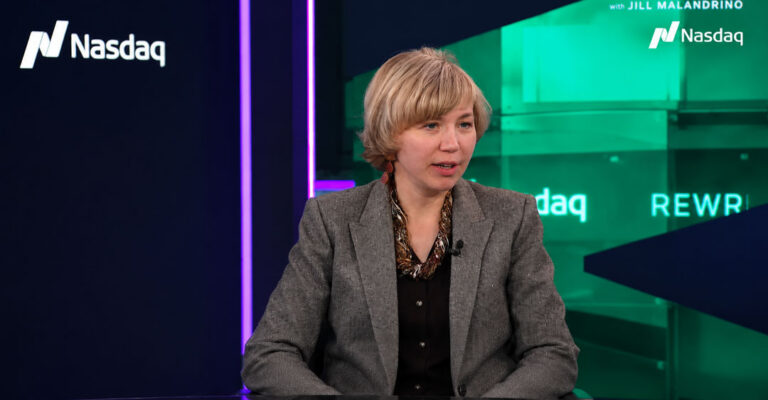
Citybiz recently published a wide-ranging Q&A with Alex Barenboim, CTO of Svitla Systems, on getting that balance right. You can also read the original interview on citybiz.
Drawing on 20+ years leading global engineering organizations, he shares how to move AI beyond experimentation into real results. He also covers building high-performing global teams, the changing role of the CTO, and the trends reshaping enterprise tech over the next five years. We're glad to share the full conversation below.
As Chief Technology Officer at Svitla Systems, Alex Barenboim has spent more than 20 years leading global engineering organizations and helping enterprises navigate complex technology transformations. With expertise spanning artificial intelligence, cloud platforms, software engineering, and digital innovation, he works with organizations to turn emerging technologies into measurable business outcomes while balancing security, scalability, and long-term value. As AI rapidly transforms the enterprise landscape, Barenboim offers a pragmatic perspective on what it takes to move beyond experimentation and achieve meaningful results. From building high-performing global engineering teams to preparing businesses for the next wave of AI-driven innovation, he shares insights on the strategies, leadership principles, and technology trends shaping the future of business.
AI has moved from experimentation to enterprise strategy. What are the biggest shifts you’re seeing in how organizations are approaching AI adoption today?
AI has migrated from a science project to a line item on the P&L, so the board wants to know what it returned last quarter, not what it might do at some point in the future. The model itself has become the least interesting part of the conversation because it’s turning into a commodity, and what matters now is your data, the guardrails around it, and how you evaluate what comes out. In the regulated industries where I spend most of my time, governance has gone from an afterthought to the forefront, and the fastest companies are the ones that built that discipline from the very beginning. Productivity only shows up when the analyst, the recruiter, and the marketer use it every day, which is why we trained our entire company and dozens of clients to use AI throughout their enterprises. AI is also moving from assistants that help a person work faster to agents that do the work and pull a person in to supervise. I use AI plenty outside the office too, for things like finding the cheapest flight and hotel for a trip, the kind of chore that used to swallow an evening.
Many companies are eager to implement AI, but not every initiative delivers meaningful results. What separates organizations that successfully integrate AI from those that struggle?
The companies that succeed start with a business problem worth solving and work back to the technology, while those that struggle start with the technology and hunt for a problem to justify it. Most failed initiatives die from bad data rather than bad models, because if you can’t get clean access to your own information, the smartest model in the world won’t be able to help you. The winners pick two or three use cases that move revenue or cost and go deep on them, rather than spreading thin across 20 pilots and POCs that impress no one. They also treat adoption as the real work, which is why we put training in front of every employee and rebuilt the workflow around the tools, since a license nobody uses is money out the door. The ones who struggle almost always skip governance, then get scared the first time a system does something they can’t explain, and when (not if) that happens, they quietly shelve the whole initiative.
As CTO of Svitla Systems, how do you balance innovation with the practical realities of security, scalability, and long term business value?
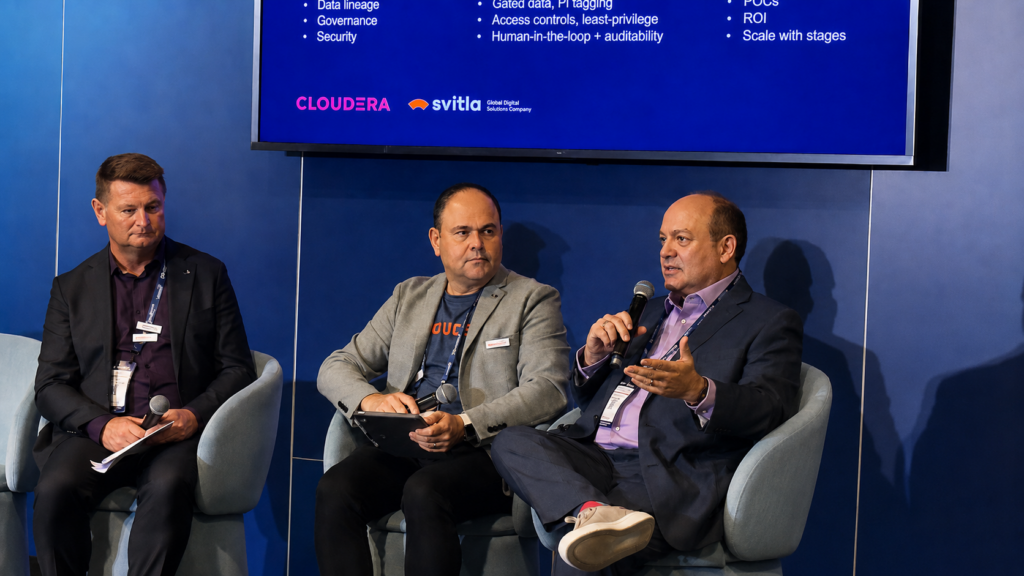
I don’t treat innovation and security as opposites, because security discipline is exactly what lets my teams move fast without breaking a client’s system. We give engineers a sandbox where they can try anything, and a production standard where guardrails, security review, and evaluation are not optional, so experimentation stays cheap and safe. I’ve spent my career running platforms that had to stay up at five nines and serve 50 million people a month, so for clients who need it, scale is a design decision we make on day one rather than something we deal with later. On long-term value, I’m overzealous about ending pilots that don’t move the revenue needle. Also, I won’t lock a client into a single vendor, because a model that dazzles everyone today may require the company to do a 180 in less than a year. Part of my job is making sure the thing we’re all excited about this quarter still earns its keep three years from now, and that strategy applies to every decision we make.
You’ve led global engineering teams for more than two decades. How has the role of distributed software development evolved, and what advantages does it offer businesses today?
When I started, distributed development was mostly about cost, so you shipped the work no one wanted to do offshore, hoped it came back working, and measured success by low hourly rates and the number of bugs that needed to be resolved. That model is gone because the reason to build a team in Colombia or Ukraine now is talent and time zone, not a discount, and those teams own entire products instead of tickets someone at headquarters created. The cloud and modern tooling have erased most distance issues, and the last few years have made most arguments moot, so a senior engineer in Buenos Aires is as present in my standup as one down the hall. The advantages for a business are reach and resilience: you’re no longer limited to talent within driving distance of the office; you get real coverage across time zones; and no single location can take you down. And now with AI in the mix, the game is no longer about who can fix the most tickets, since a smaller AI-augmented team spread across the right places outdelivers an army that used to cost 10 times as much about 10 years ago.
What are the most common technology challenges organizations bring to Svitla Systems, and how does your team help solve them?
The most common one is a company that’s been told to do something with AI and has 20 ideas, but no path from a PPT to something actually running in production. Right behind that is talent: they can’t hire or retain the data scientists and machine learning engineers they need, and we can put a proven team on the ground in weeks instead of the year it would take to build one from scratch. A lot of them are also sitting on legacy systems and messy data, and realistically, we usually have to clean the plumbing before any of the exciting AI work has a prayer of succeeding. We don’t solve any of this by throwing bodies at the problem; we bring a standardized delivery process and a full MLOps lifecycle so that what we build is repeatable and can be run by their own people after we are no longer there. More and more, clients ask us to make their existing engineers faster, so we train their teams to be AI-enhanced, because the best outcome is a client who walks away more capable than when we started.
Enterprise technology is evolving at an unprecedented pace. Which emerging trends do you believe will have the greatest impact on businesses over the next five years?
The trend that dwarfs everything else is the move from AI that assists to AI that acts, because once an agent can carry a piece of work from start to finish, every org chart and every headcount plan gets rewritten to some degree (if not completely). Right behind it is the collapse in the cost of building software: when the thing that took a hundred engineers takes five, winners stop being decided by engineering budgets and start being decided by proprietary data, and the judgment to know what’s worth building, since almost anything can be built now. Voice is the third rail because we already run systems that handle thousands of concurrent calls. But within three to five years, a real back-and-forth with an awesome AI model will feel as natural as a mouse click, which will probably end the call center as we know it. Security is what worries me, since the same models that make my engineers faster also make attackers faster, and one can’t fight a machine-speed threat with a human-speed response. The one most people miss is AI stepping off the screen entirely, because the vision systems we put on factory floors today are the first wave of software reaching the physical world, and that market is bigger than everything the internet has touched so far.
You’ve written extensively about executive technology leadership. How has the role of the CTO changed as technology has become a core driver of business strategy?
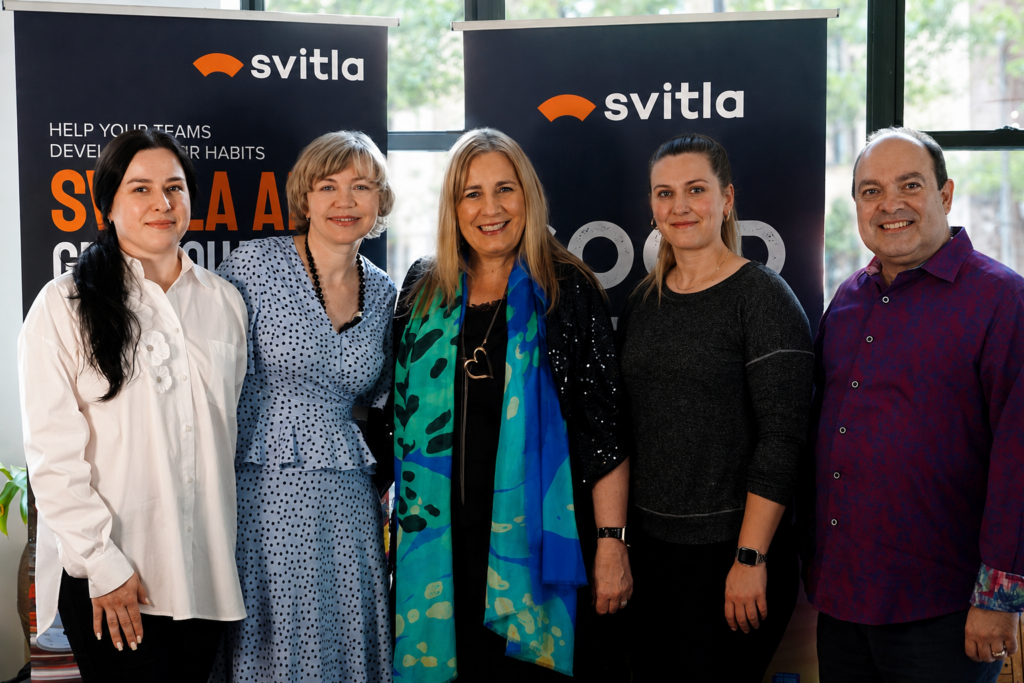
When I got my first CTO job, I was the person you called when something broke, a head of technology who kept the servers running and was usually too busy to set foot in the boardroom. That role is now gone because technology stopped supporting the business model and became the business model. I wrote From CTO to Trusted Advisor about exactly that shift from service provider to strategic partner. The job today is more about translation, turning what the board wants into architecture, and turning what the technology can do into a plan a CFO will be more than happy to fund. If you can only speak one of those languages, you’re half a CTO. It has also become an outward-facing role, because I spend as much time with clients and their executives as I do with my own engineers. The days of leading from behind the firewall are over. AI raised the stakes even further because every company is now a technology company, whether it likes it or not, and it falls to the CTO to make that a reality.
Engineering talent remains highly competitive worldwide. What advice would you give organizations looking to build and retain high performing technology teams?
The first thing I tell colleagues and clients is that great engineers rarely leave for money. They leave because they’re bored, so give them real problems and real ownership; the paycheck gets them in the door and the work keeps them there. Stop limiting your search to one zip code. I’ve built teams of over 150 engineers in Argentina and Colombia within months, and that talent is every bit as good as anything you’ll hire at home. Put a real career path in front of people, and I mean written progression criteria and skills matrices rather than vague promises, because uncertainty about the future is exactly what recruiters prey on. Invest in making your people better, which today means training every engineer to work with AI, since engineers who feel themselves growing don’t return a recruiter’s call. And keep the bar high, because A players stay for other A players, and nothing empties a great team faster than watching mediocrity get tolerated.
Looking back on your career, what leadership principles have had the greatest impact on your ability to scale engineering organizations and deliver successful outcomes?
The principle that has carried me furthest is that you scale people, not process. I hire people smarter than me in their specialty, give them clear ownership, and get out of their way; a leader who has to be the smartest person in the room has built a very small room. Standards are what turn size into an advantage rather than a liability, and every organization I’ve run, from four hundred at ADT to over a thousand at Svitla, got better the day delivery became repeatable rather than heroic. I stay close enough to the technology to call nonsense when I hear it, because engineers follow a leader who has done the work and can still read the code. I measure outcomes rather than activity, because being busy is easy and producing results is hard. And I grow leaders instead of collecting followers, because the real test of my job is what the organization does after I leave, and the platform my team built at Verizon 20 years ago is still running today.
As businesses continue to navigate rapid technological change, what opportunities do you believe leaders should be preparing for now to remain competitive in the years ahead?
The biggest opportunity is right in front of everyone: the workforce. Firms that make every employee fluent with AI right now will run circles around those still debating it a year from now. Get your data house in order too, because the agents coming out of the labs can already do real work, and they’re only as good as the information you put in front of them. Stop bolting AI onto old processes and redesign the work itself; that’s where the gains show up, and they show up fast, which we proved by rebuilding our own internal hiring process. Start small, but start now, because the scar tissue your team builds over the next 12 to 18 months can’t be bought later at any price. The cost of experimenting has never been lower, and the cost of waiting has never been higher.